Solar Panel Cleaning Service Contract Checklist for Plants
Frobot Technical Team ·
Panel cleaning looks like a simple service on paper: a crew arrives, the modules get washed, an invoice follows. Yet when things go wrong on site, the arguments always come from the same handful of topics. Which arrays were included? Were bird droppings part of the price? Who supplies the water? What counts as a clean panel? And who pays when a module gets scratched?
Those answers belong in the contract, not in a phone call after the work has started. Below are the clauses a solar panel cleaning service agreement should contain, weighted towards the points that cause the most trouble in practice. If you are earlier in the process, our guide on how PV cleaning services are procured is a good starting point.
1. Scope: what exactly gets cleaned?
Scope is the most frequently skipped and most frequently disputed clause. Every detail left vague turns into a variation request later. Define:
- Which arrays and blocks: marked on a site plan and identified by block or inverter number.
- Panel count and total surface area: stated in whichever unit the price is based on.
- What is included: general dust and surface cleaning, bird droppings, moss and organic residue, frame cleaning.
- What is chargeable as an extra: cleaning around inverters and transformers, vegetation under the arrays, heavy cement or paint residue, drainage clearing.
- What is out of scope: electrical maintenance, cable management, mechanical repair and anything requiring a separate discipline.
2. Frequency and scheduling
The number of annual visits, the months they fall in and the rules for changing the plan all belong in the contract. Because soiling profiles vary by region, a seasonal plan works better than a fixed calendar: harvest season, pollen season and dust-storm months can be brought forward. We set out how to build that plan in our annual maintenance and cleaning calendar.
- Number of visits per year and the scope of each visit.
- Notice period before a visit and the channel used to give it.
- Weather postponement rules: what conditions trigger a delay, who decides, and when the make-up visit happens.
- Coordination procedure where cleaning requires curtailment or a shutdown.
3. Method and equipment
The method clause is the clause that protects your module warranty. Do not settle for a line saying professional equipment will be used; ask for measurable commitments:
- Water quality: conductivity or hardness limits and any treatment method used.
- Pressure limit: maximum water pressure applied and the nozzle distance.
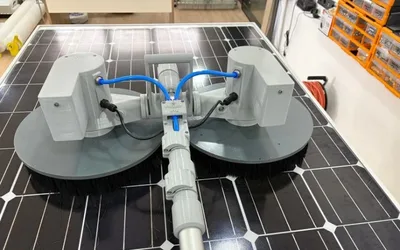
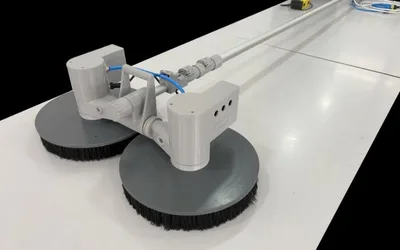
- Brush type: bristle stiffness, brush width, rotation speed and a ban on abrasive materials.
- Chemicals: none as a rule, with prior written approval required in exceptional cases.
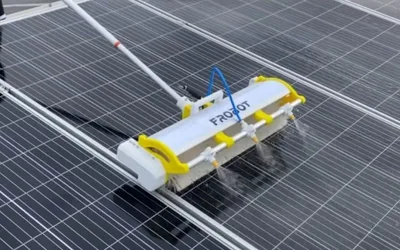
- Robotic or manual: which method applies to which array, plus a commitment that nobody steps on the modules.
- Compliance statement: written confirmation that the method follows the module manufacturer's published cleaning instructions.
4. Water and power
Water is a recurring argument and it usually surfaces mid-job. The contract should state who supplies it, who pays for it, whether on-site storage exists, and what access route and conditions apply for a tanker. The same goes for electricity used to charge equipment or provide lighting.
5. Reporting and records
Reporting is what proves the service happened and what builds your plant's maintenance memory. Ask for at least:
- Before and after photographs for every visit, ideally from fixed vantage points.
- A visit report: date, time, crew, arrays and panel count cleaned, water used and method applied.
- Panel-level defect notes: cracked glass, suspected delamination, loose clamps, damaged frames, sagging cables.
- Visual or thermal inspection findings, mapped to the specific panels concerned.
- Delivery of the report in a digital, archivable format, within a defined deadline.
These records serve more than service tracking; they become evidence if a warranty dispute ever opens.
6. KPIs and acceptance
The phrase "clean panel" is not measurable on its own. Defining acceptance criteria up front protects both parties:
- Definition of clean: no visible dust film, mud line, bird droppings or moss residue, and no water spotting or mineral deposit left on the glass.
- Spot-check procedure: how acceptance is verified, what share of panels is sampled at random and how the check is recorded.
- Re-work obligation: the time within which any section failing the criteria is re-cleaned at no charge.
- Production comparison caveat: output gains after cleaning can be measured, but irradiance, temperature and seasonality must be separated out before treating them as a performance indicator. Writing that caveat into the contract prevents unrealistic expectations later.
7. Insurance and liability
On a solar plant, a single careless move can turn into an expensive claim. Keep this clause explicit:
- Contractor liability and third-party insurance, with the policy attached as an annex.
- Who bears damage to modules, cables, mounting structures and site equipment, and how damage is assessed.
- Personnel accident cover, social security registration and lawful employment compliance.
- For rooftops, work-at-height certification, fall arrest equipment and current training records. We discuss rooftop-specific risk in our guide to rooftop cleaning safety.
8. HSE and site rules
Site safety deserves as much contract space as price. Put the required entry documents, work permits, lockout and tagout procedures where relevant, mandatory personal protective equipment, vehicle rules inside the plant and the emergency contact chain in writing. Also settle where equipment enters, parks and is stored, and where waste water is directed.
9. Personnel and subcontracting
Knowing who turns up determines much of the service quality. Good practice is to name the core crew and their qualifications in the contract, to require notice of crew changes, and to make any subcontracting subject to the client's written approval. Where subcontractors are used, state clearly that every obligation in the contract passes to them unchanged.
10. Pricing structure
What matters here is the structure, not the number. Record the unit the price is based on (panels, square metres, arrays or visits), whether mobilisation and travel are included or billed separately, how out-of-scope work is priced, payment terms, and how escalation is calculated in multi-year agreements. Our step-by-step guide on calculating cleaning cost shows how to model those items for your own site.
11. Term, termination and penalties
Define the contract term, whether it renews automatically, the notice period for termination and what counts as grounds for termination with cause. Agreeing in advance what happens when visits are late, acceptance criteria are repeatedly missed or safety rules are breached makes the relationship predictable rather than adversarial.
12. Confidentiality and data
A cleaning contractor sees site layouts, production data and occasionally SCADA information. Cover confidentiality, retention periods, the ban on sharing with third parties, and return or destruction of data at the end of the contract. Decide separately whether site photographs may be used for the contractor's marketing.
Pre-signature checklist
- Is scope written down by block and panel count?
- Are visit numbers, seasonal timing and postponement rules defined?
- Are water quality, pressure limits and brush type committed to?
- Is compliance with the module manufacturer's instructions confirmed in writing?
- Is it clear who supplies water and power?
- Are report format, photo requirements and delivery deadlines specified?
- Are acceptance criteria and a re-work obligation included?
- Are insurance policies attached?
- Have work-at-height certificates been checked?
- Is subcontracting subject to approval?
- Are the pricing unit, extras and escalation basis clear?
- Are notice periods and penalties written down?
Frequently asked questions
Do I need a contract for a one-off cleaning?
Yes, at minimum a short document covering scope, method, insurance and acceptance. The risk of module damage is identical on a single visit, so liability needs to be assigned in writing.
Can I make a production increase a contractual guarantee?
We would advise against it. Output depends on irradiance, temperature, shading and grid curtailment, none of which the contractor controls. Defining a measurable cleaning quality criterion instead is both fairer and easier to enforce.
What if the contractor does not bring the robot they promised?
If the method clause names the equipment, any substitution requires your approval. Where you want robotic cleaning available continuously, owning the equipment yourself is a valid alternative; our product range is worth reviewing with that in mind.
Multi-year contract or annual renewal?
Multi-year agreements usually buy better scheduling priority and continuity of site knowledge. If you want to see performance first, starting with a one-year term and clear termination conditions is a reasonable approach.
Let us shape the contract together
Frobot provides a solar panel cleaning service across Turkey and builds a scope, schedule and reporting plan for each site individually. Everything listed above is a standard part of our proposal process: which array is cleaned by which method, where the water comes from and what the report contains are all settled before you sign.
Share your location, panel count and array type and we will put together a service plan that fits. You can reach us through our contact page.
Are your panels clean?
Buy our robots and brushes in credit card instalments, or request a quote for on-site cleaning.