8 Critical Solar Panel Cleaning Mistakes and Their Fixes
Frobot Technical Team ·
Solar panel cleaning looks like a simple job at first sight: a little water, a brush and some time. Yet a large share of the panel damage we see in the field is caused by mistakes made during cleaning, and most of that damage cannot be reversed.
Below you will find the eight mistakes we encounter most often, together with the correct approach for each one.
1. Using a high-pressure washer
This is the most common and the most expensive mistake. A pressure washer seems to remove dirt quickly, but it strains the sealing gaskets inside the panel frame. Once water seeps into the panel, delamination and eventually corrosion begin. High pressure can also wear away the anti-reflective coating on the glass.
The right way: Use low-pressure, controlled water flow. The aim is not to tear the dirt away with pressure but to rinse it off the surface after the brush has loosened it.
2. Using detergent and chemical cleaners
Dish soap, glass cleaner and industrial chemicals leave a thin film on the panel surface. That film reduces light transmission and also makes dust bond to the glass faster. Products with abrasive content damage the coating permanently.
The right way: As a rule, do not use chemicals. A suitable brush and clean water are enough for the bulk of soiling. For stubborn stains the answer is a mechanical solution, such as a scraping attachment, rather than a chemical one.
3. Using hard brushes, wire, scrapers or abrasive sponges
Panel glass is durable, but the coating on it is not. A stiff-bristled brush, steel wool or an abrasive sponge leaves micro-scratches that are hard to see yet cause production loss. Those scratches scatter the light and create surfaces that hold dirt over time.
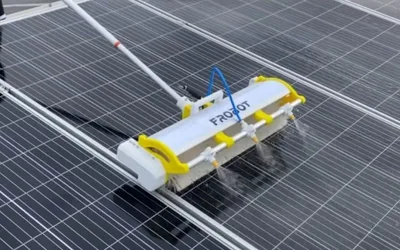
The right way: Use a soft-bristled brush suited to the panel surface. Brush pressure should be adjustable; on professional robots the brush height is set from the remote, so the pressure stays under control on every panel.
4. Cleaning while the panel is hot
At midday the panel surface reaches very high temperatures. When cold water hits hot glass, thermal shock occurs and the risk of cracking appears. The water also evaporates quickly and leaves lime and mineral stains on the surface, so the result can be worse than the state before cleaning.
The right way: Clean early in the morning or late in the afternoon, while the surface is cool. Cloudy days are also suitable.
5. Standing on the panel
Because access is difficult, especially on rooftop systems, people often walk on the panels to move around. A panel is not a walking surface. Standing on it causes micro-cracks in the cells; those cracks are not visible immediately but appear as production loss within months. On a wet panel there is also a serious risk of falling.
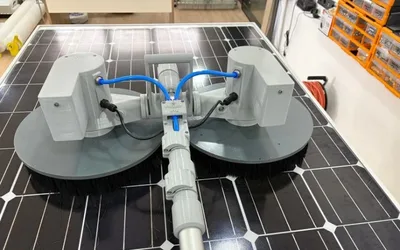
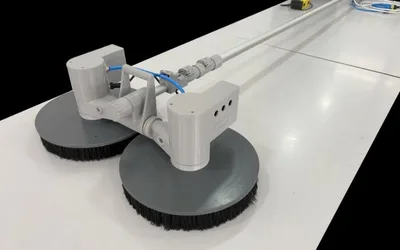
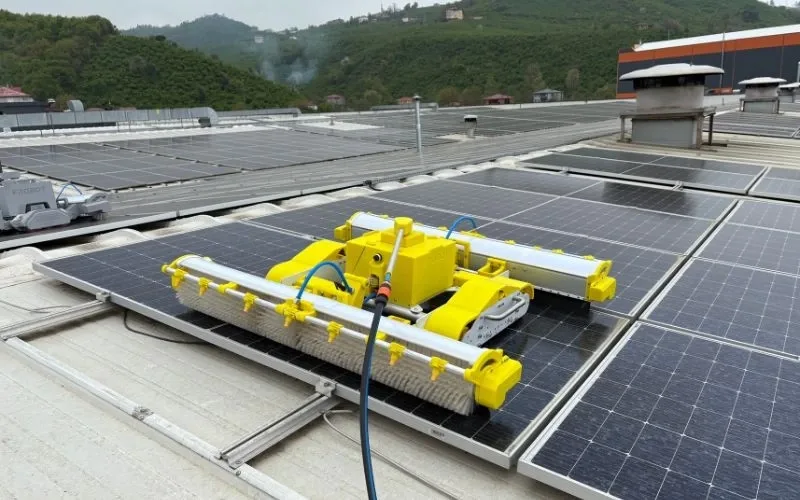
The right way: Use equipment that can work without touching the panel. Motorised brushes on telescopic poles, or robots that travel across the panel on their own, meet this need.
6. Washing with hard water and leaving it to dry
When cleaning is done with water high in lime, a white mineral residue is left on the surface once the water evaporates. That residue builds up over time, blocks the light and stops coming off with ordinary brushing.
The right way: Use low-mineral water where possible. If you have to use hard water, finish the cleaning without letting the surface dry on its own and do not leave standing water on the glass.
7. Forcing bird droppings with a brush
Dried bird droppings bond hard to the surface. Trying to remove them with a normal brush drags the residue across the glass and opens scratches. Scraping with a knife or a metal spatula is direct damage.
The right way: Soften the stain with water first, then use a scraping solution designed not to harm the panel. On our ATA 120 model the bird dropping scraper attachment, controlled from the remote, is offered as an option, so hard stains are removed without damaging the panel.
8. Ignoring electrical safety
Panels generate electricity as long as they receive daylight. Bringing water together with a damaged connector, a cable chewed by rodents or a crushed line creates a serious risk. A quick visual check before cleaning prevents most problems.
The right way: Inspect the cables and connectors visually before starting, keep damaged areas outside the cleaning zone, and record them so they can be repaired.
The common cause of these mistakes: rushing
Almost all eight mistakes above come from the same place: the wish to finish the job as fast as possible. Pressurised water looks faster, detergent seems more effective, working at midday fits the programme, and stepping on the panel is easier than setting up a ladder. The time gained in the short term is paid for out of the service life of the panel.
The right approach is to plan cleaning as a maintenance task. Preparing the equipment in advance, choosing the working hours according to surface temperature and reviewing the site beforehand make the job both safer and, in fact, faster, because a properly organised operation needs no repetition, correction or damage repair.
A short summary of correct cleaning
- Work while the surface is cool and avoid the midday heat.
- Use low-pressure water and a soft brush.
- Do not use chemicals.
- Do not step on the panel; prefer equipment that requires no contact.
- Use a suitable mechanical solution for stubborn stains.
- Review the connections while cleaning.
- Record the production data before and after cleaning.
Frequently asked questions
Is hosing the panels down enough?
A hose only removes loose dust. Bonded dirt, pollen film and organic residue need mechanical action, in other words a brush. Washing with water alone usually leaves marks on the surface.
Is cleaning needed after rain?
Usually yes. Rain carries dust to the lower edge of the panel and leaves a mud band there. Because that band permanently shades the bottom row of cells, it should not be overlooked.
Can panels be cleaned in winter?
They can, on days with no risk of freezing. On days when the temperature is expected to fall below zero, water-based cleaning must be avoided; water that freezes on the surface is both a hazard and a source of damage.
Is damage from incorrect cleaning detectable?
Micro-scratches and cracks are not always visible to the eye, but they can be identified with a thermal camera and production data analysis. Because this kind of damage is generally irreversible, prevention is the only real solution.
Clean with the right equipment
To clean your panels without putting them at risk you need either the right equipment or the right team. At Frobot we offer both: locally manufactured ATA 120 and ATA 80 cleaning robots, and a PV plant panel cleaning service across Turkey.
You can review our products page for the other equipment options, or get in touch with us for advice and a quotation for your site.
Are your panels clean?
Buy our robots and brushes in credit card instalments, or request a quote for on-site cleaning.